Help protect and share the world’s cultural heritage
Your 100% tax-deductible donation fuels CyArk’s mission to:
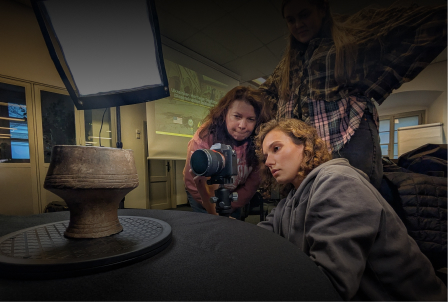
Preserve history with 3D documentation of at-risk cultural sites.
Empower communities with tools and training to protect their heritage.
Inspire audiences with immersive stories that bring the past to life.
Every contribution helps to preserve and celebrate the world’s cultural wonders.
Is my donation tax-deductible?
Yes. CyArk is a registered 501(c)(3) nonprofit organization in the United States, and your donation is tax-deductible to the fullest extent allowed by law. After completing your donation, you will receive an email receipt that includes all necessary details for tax purposes.
How does my donation support CyArk?
Your donation helps us document at-risk cultural sites, train local heritage professionals in 3D documentation, and create immersive experiences that inspire and educate. Every contribution fuels our mission to preserve and share the world’s cultural treasures.
Is my payment information secure?
Absolutely. Our donation platform, Donorbox, uses SSL/TLS encryption to ensure your personal and payment information is fully protected. Donorbox is PCI-compliant, meaning it meets the highest standards for secure online transactions, so you can donate with confidence.
Secure donation
Newsletter
Subscribe to our newsletter
Sign up for CyArk’s monthly newsletter to learn about our latest efforts to document sites around the world.
Pakistan
Jaulian
Buddhist monastery and stupas at Taxila on the Silk Road
The Buddhist monastery and associated stupas of the Jaulian archaeological complex shed light on the early evolution and spread of Buddhism along the Silk Road. The site was constructed between the 2nd and 4th centuries CE and is located in the Khyber Pakhtunkhwa Province of Northern Pakistan, part of the ancient Kingdom of Gandhara. Jaulian is one of many Buddhist sites constructed throughout the region during the Kushan period which was marked by general prosperity, a cosmopolitan mix of cultures, and state support of architecture.
Jaulian forms part of the archaeological complex of Taxila, inscribed by UNESCO in 1980, and provides an excellent example of what a religious complex in the Gandhara region looked like during the Kushan period. The complex consists of the main stupa and twenty-seven subsidiary stupas located around the main stupa and in two adjacent courts. A stupa or Buddhist shrine, is a mound-like religious structure which may contain relics of the Buddha or a Buddhist saint, commemorate a holy event, or denote a sacred location.